IntraConnect Singapore

Why banking infrastructure matters for Singapore–India business, and what “opening up” really changes

Singapore–India business often looks simple on paper. The demand is obvious, the talent is deep, and the trade corridors are busy. Yet in practice, the deal flow between the two countries has always been shaped by a less glamorous force: banking infrastructure. When payments move smoothly, business feels larger than it is. When they do not, even strong companies start acting small, keeping buffers, delaying expansion, and avoiding perfectly good opportunities simply because money takes too long to clear or becomes too hard to explain.

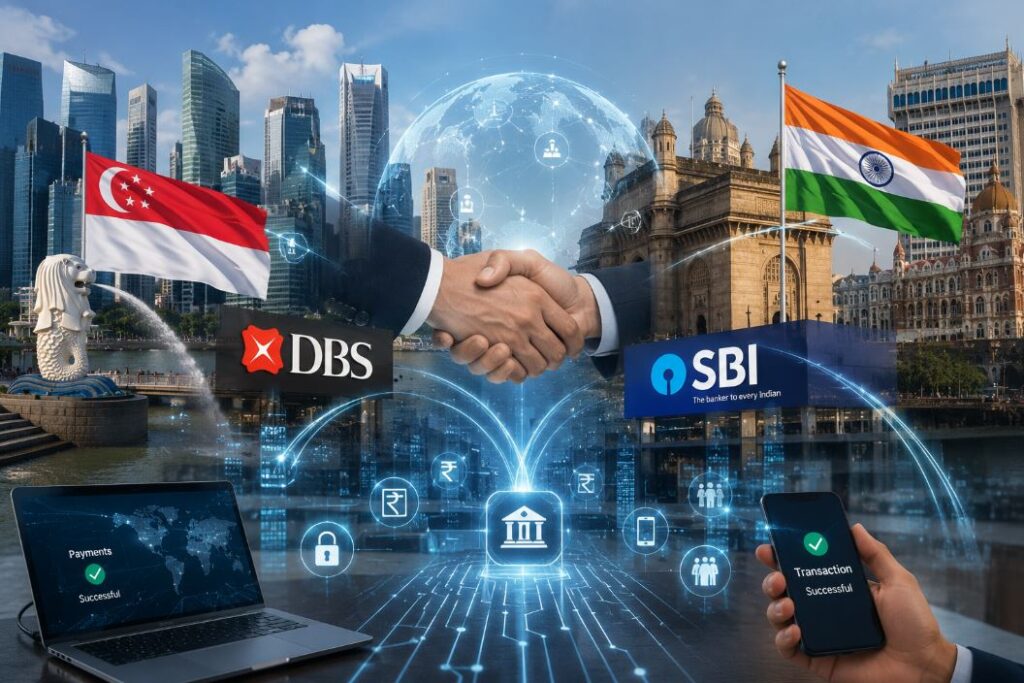
This is why the idea of Singapore and India “opening up” to each other’s banks matters. It is not merely a diplomatic headline. It is about access to rails and balance sheets on both sides of the corridor, so companies can operate with fewer intermediaries and less friction. For Singapore firms selling into India, deeper local banking presence can mean faster collections, better onshore support, and trade finance that matches the real rhythm of Indian counterparties. For Indian firms expanding through Singapore, stronger qualifying access in Singapore can mean more credible treasury operations, clearer cross-border cash management, and a smoother path to serve regional customers with a banking partner that understands Indian business culture.

To understand why this matters, it helps to say out loud what many entrepreneurs quietly complain about: Indian banking has often been difficult to use, even for legitimate customers. The issue is not that India lacks capable banks. It is that the service layer can be inconsistent and the compliance layer can be blunt. Many businesses experience onboarding that takes too long, requests for documentation that feel repetitive or poorly scoped, and processes that depend on a relationship manager rather than a clear system. When something goes wrong, resolution can take days, not hours, and that time cost becomes a commercial cost.

Cross-border payments amplify these weaknesses. When a transaction is flagged, a Singapore company often wants two things: speed and certainty. They want to know whether the payment will clear, what information is missing, and what the final timeline is. Indian banking workflows have not always provided that clarity. The result is that legitimate businesses sometimes build around the problem, using extra intermediaries, over-documenting every payment, or shifting settlement methods simply to reduce the probability of getting stuck mid-transfer.

Singapore’s value in this corridor has always been the opposite. It offers predictability and a more engineered approach to banking operations. Companies operating from Singapore tend to have cleaner treasury discipline, clearer documentation standards, and more transparent processes. That does not mean Singapore is “easy” in a simplistic sense. Compliance is serious, and KYC expectations can be demanding. But the difference is that the rules tend to be consistent, and the customer experience often provides better visibility. If a bank asks questions, the business can usually understand the logic behind them and plan accordingly.

When the two countries talk about opening up to each other’s banks, the practical significance is that it can narrow the gap between these operating cultures. More branches and stronger status in the host country means more direct supervision of customer experience, more capacity to build corridor-specific products, and more incentive to compete on service rather than on legacy processes. Over time, that can improve the things SMEs care about most: how quickly a cross-border payment clears, how reliably trade finance is issued, and how predictable onboarding and account maintenance feel.

For small businesses, this kind of agreement does not magically remove friction. What it can do is create more options, which is often the real competitive advantage. If you can choose between a local bank, a corridor-experienced foreign bank, and a regulated payment institution, you can design your settlement structure rather than accept it. You can keep operating funds in Singapore, collect in India through a more predictable channel, and use trade finance that aligns with the invoice cycle instead of forcing cash to sit idle. You can also reduce the risk that one institution’s internal policy change becomes a crisis for your business.

There is a wider strategic point here as well. Singapore–India commerce is no longer limited to traditional goods trade. It now includes services, software, data-driven operations, and increasingly complex supply chains. In these models, banking is not a back-office detail. It is part of the product. If a company promises next-day fulfilment, or a platform promises instant settlement, then payment predictability becomes a customer experience feature. The infrastructure decides whether the promise is credible.

The corridor will keep growing with or without any single agreement, because the economic logic is strong. But growth is not the same as efficiency. The real prize is not just more transactions; it is fewer delays, fewer surprises, and less energy spent on proving that legitimate business is legitimate. If mutual banking access pushes both systems toward more reliable service and clearer compliance, the benefit will show up quietly, in the way successful infrastructure always does: payments that clear on time, credit that arrives when needed, and entrepreneurs who stop thinking about banking because they can finally focus on business.

Contact us about Incorporating in Singapore

Get a free consultation about company incorporation for Indian-Singapore business. Trade, IT, e-Commerce between India and Singapore.  Requirements, cost and compliance

Click Here

Learn More About Us

Contact Us

Take the next steps in achieving your business goals.